Taking Care of People & the Planet
Treating Animals
with Care
Treating animals with care is a core part of how we source products at Sprouts. We partner with suppliers to improve conditions across our supply chain — focusing on areas such as housing systems, space, enrichment and processing practices.
Animal welfare is complex and presents real challenges at scale. Rather than relying on a single standard, we set clear expectations aligned with recognized frameworks, engage directly with suppliers to understand and track practices over time and support the use of higher welfare systems that allow animals more space and the ability to express natural behaviors.
This approach has driven meaningful progress across key categories, while also improving visibility into supplier practices. We’re proud of the progress made and recognize there is more to do.
Chicken Welfare
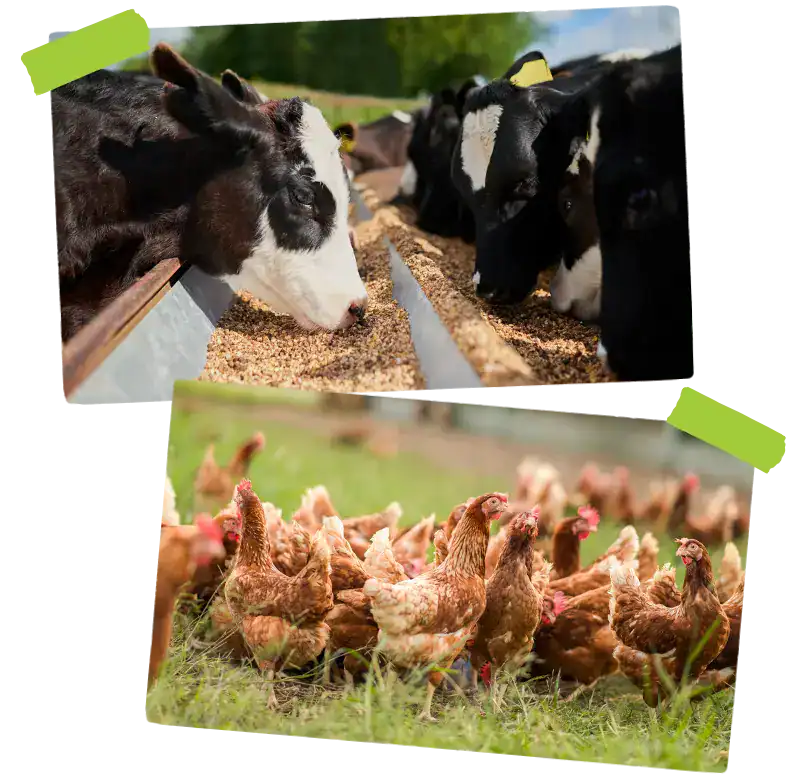
Advancing practices aligned with key elements of the Better Chicken Commitment (BCC) — including improvements to housing conditions, access to environmental enrichments and more humane processing methods such as controlled atmosphere stunning (CAS) is a priority for Sprouts. Across our Sprouts Brand chicken in the meat department, we are making measurable progress across these areas. Between 2024 and 2025, the share of Sprouts Brand chicken volume incorporating key welfare components — including reduced stocking density, enrichments and CAS — increased from 61% in 2024 to 71% in 2025. We are targeting full adoption of these components across the remaining supply by the end of 2026. In our deli department, we introduced a nationwide organic rotisserie chicken program in 2025 that is Certified Humane, representing a further step toward expanding access to higher welfare chicken for our customers.
Egg-Laying Hens
Egg‑laying hens represent one of the most significant areas of progress in our animal welfare efforts. Sprouts has fully transitioned away from conventional cage systems, with 100% of egg sales sourced from cage‑free or better production systems. We are advancing toward higher welfare systems, with 85% of egg sales coming from organic, free‑range or pasture‑raised farms, and 58% from organic production. These systems provide hens with more space, opportunities for natural movement and, in many cases, access to the outdoors — supporting improved living conditions.
Organic Grass-fed Beef
Beef production presents unique animal welfare considerations, particularly given the range of production systems across the industry. We prioritize sourcing from systems that allow cattle to live more natural lives, including access to pasture and the ability to graze. In 2025, 63% of beef sales are sourced from grass-fed or organic systems, with 33% from certified organic production. These approaches are associated with more natural living conditions, including outdoor access and grazing, which support improved animal welfare outcomes.
Group-Housed Pork
In late 2025, we completed the transition of our meat department pork supply to 100% open‑pen housing systems, eliminating the use of gestation crates. Gestation crates significantly restrict a sow’s ability to move, limiting natural behaviors such as turning around, walking and social interaction. Transitioning to open‑pen systems allows for greater freedom of movement and supports more natural behaviors. We also recognize that confinement can occur during other stages of production, including breeding and farrowing. We are engaging with suppliers to better understand how animals are managed during these phases and identify opportunities to reduce time spent in confined systems while maintaining animal health and safety.